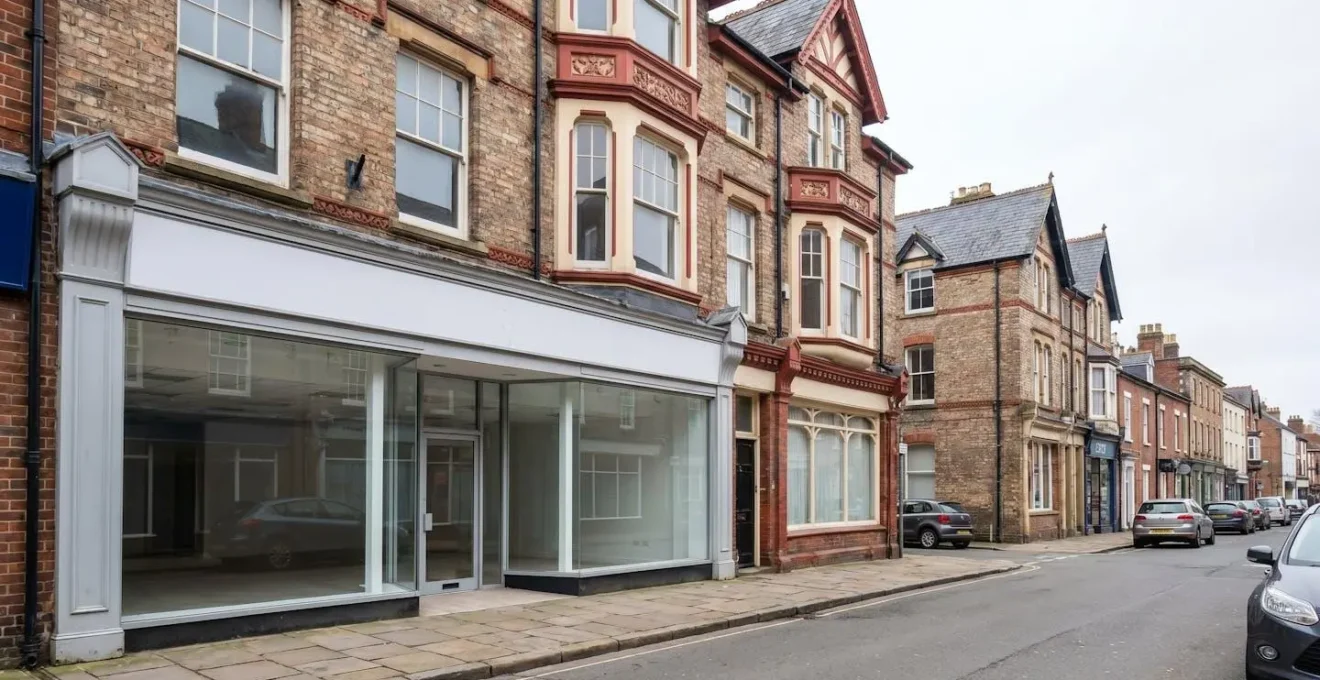
The real value in Class E isn’t just the planning freedom; it’s in mastering the secondary regulations that your competitors ignore.
- Class E allows flexible swaps (shop to restaurant), but councils can block this power with Article 4 Directions.
- Physical extensions or mixed-use conversions trigger significant costs like CIL and Section 106 obligations.
- You can’t legally operate without securing separate Premises, Food, and potentially Pavement Licences from the council.
Recommendation: Treat every Class E project as a strategic legal and financial exercise from day one, not just a simple change of use.
The introduction of Use Class E in the UK was heralded as a revolution for the high street, promising a new era of flexibility for commercial property owners. The core idea seems simple: convert a vacant shop into a bustling café, or an old office into a modern gym, all without the delay and cost of a full planning application. This is the opportunity that has developers and investors excited, and rightly so. The potential to quickly adapt to market demands, fill vacant units, and generate rental income is a powerful proposition.
However, many guides stop there, simply listing the uses included within Class E and celebrating the removal of one bureaucratic hurdle. They touch upon the surface of the opportunity but fail to navigate the treacherous waters that lie beneath. The common advice to “just check the council website” is a dangerous oversimplification. This approach misses the fundamental reality of UK property development: planning permission is only one piece of a much larger, more complex puzzle.
This is where strategic advantage is found. The most profitable opportunities don’t lie in just using Class E, but in understanding and mastering the secondary minefield of constraints and obligations that surround it. The real question isn’t “Can I change the use?”, but rather “What is the true cost and legal exposure of this change?” This guide is designed for the savvy investor and developer. We will move beyond the basics to explore the world of regulatory arbitrage—navigating Article 4 Directions, CIL liability, Section 106 negotiations, and local licensing—to unlock value where others see only barriers.
This article provides a strategic roadmap. We will dissect the key regulatory challenges you’ll face, offering practical insights and frameworks to not only de-risk your projects but also to turn these constraints into a source of competitive advantage. Let’s explore the framework for turning Class E flexibility into tangible profit.
Summary: A Strategic Breakdown of Class E Commercial Property Development
- Class E Explained: What Activities Can You Swap Between Legally?
- Local Restrictions: Did the Council Block Class E Changes in Your Street?
- Section 106 Agreements: How to Negotiate Affordable Housing Contributions Down?
- CIL Liability: How Much Tax Will You Pay on Your New Extension?
- Certificate of Lawfulness: How to Prove Your Existing Use Is Legal?
- Article 4 Directions: How to Check if Your Permitted Development Rights Are Removed?
- Conservation Area Consent: What Can’t You Do to the Exterior of Your Building?
- Local Licensing: navigating HMO and Selective Licensing Schemes?
Class E Explained: What Activities Can You Swap Between Legally?
Introduced in September 2020, Use Class E represents a radical simplification of commercial planning use classes in England. It consolidates a wide range of former uses, including retail (A1), financial services (A2), restaurants (A3), and offices (B1), into a single, flexible “Commercial, Business and Service” class. The core principle is that a property owner can change the use of their premises from any one activity within Class E to any other activity within the same class without needing to apply for planning permission. This was a deliberate government policy to support the rejuvenation of high streets by allowing landlords to adapt quickly to changing consumer habits.
The scope of this flexibility is broad. It means a struggling retail unit can become a restaurant, an office can be converted into a gym, or a health clinic can transform into a nursery, all under the same permitted development right. This is the foundational opportunity that investors must grasp. The value is no longer just in the asset itself, but in its inherent adaptability. An official government memo confirms that no planning permission is required for changes within Class E since September 2020, creating a more fluid and responsive commercial property market.
The full list of activities covered by Class E demonstrates the breadth of this opportunity. Understanding these categories is the first step in identifying potential value-add scenarios for a commercial asset. The key categories include:
- Shop/Retail: Sale of goods to the public (excluding hot food).
- Financial/Professional Services: Banks, estate agents, and other services for visiting members of the public.
- Restaurant/Cafe: Sale of food and drink for consumption primarily on the premises.
- Office: Business operations that do not involve disruptive industrial processes.
- Medical/Health Services: Clinics, consulting rooms, and day centres.
- Creche/Day Nursery: Childcare facilities.
- Indoor Sport/Recreation: Gyms, fitness centres, and indoor sports.
- Light Industrial: Research & Development and light industrial work compatible with residential areas.
While this freedom is powerful, it is not absolute. This is merely the “front door” of the opportunity. The true challenge, and where strategic value is created or destroyed, lies in the myriad of other consents and restrictions that still apply. Simply knowing you *can* change a shop to a restaurant is only 10% of the battle.
Local Restrictions: Did the Council Block Class E Changes in Your Street?
The single greatest threat to the flexibility offered by Class E is an Article 4 Direction. This is a legal tool used by a Local Planning Authority (LPA) to remove specific permitted development rights in a defined geographical area. In essence, it’s the council’s way of saying, “We know the national law allows this, but in this specific street or area, you will need to apply for full planning permission to do it.” Councils use these to protect the character of an area, prevent the loss of office or retail space, or control the proliferation of certain uses.
For an investor, failing to identify an Article 4 Direction before acquisition or development is a catastrophic and costly error. It can instantly render a business plan unviable. Imagine purchasing a vacant shop with the sole intention of converting it into a residential unit (a Class MA right, also often restricted by Article 4) or even a restaurant, only to find out the council has removed that right. Your “no-planning-needed” project has just become a long, expensive, and uncertain planning application.
Therefore, the first piece of due diligence on any potential commercial project is to check for Article 4 Directions. This is non-negotiable. The process involves a forensic examination of the council’s planning maps and policy documents, as shown in the due diligence process below.
As you can see, this is a hands-on, detail-oriented task. You are searching for layers on a planning map or specific policy documents that list which rights have been removed. This isn’t just a simple search; it requires careful interpretation of legal documents to understand the precise scope of the restriction. The following checklist provides a structured way to approach this critical task.
Your 10-Minute Due Diligence Plan: Checking for Article 4 Directions
- Visit your local council’s planning portal homepage and navigate to the ‘Planning Constraints’ or ‘Interactive Map’ section.
- Enter the full postcode of your target property to centre the map on your area of interest.
- From the map legend or layers menu, select and activate the ‘Article 4 Directions’ layer to see if any zones appear.
- Carefully check if your property’s boundary falls within any of the shaded Article 4 zones displayed on the map.
- If a zone is present, find and download the specific Article 4 Direction document linked to it to understand its scope.
Section 106 Agreements: How to Negotiate Affordable Housing Contributions Down?
Section 106 (S106) agreements are a spectre that haunts larger development projects. These are legally binding obligations entered into with the local council to mitigate the impact of a development. While often associated with providing affordable housing, they can also cover contributions towards local infrastructure, transport, or public services. For the opportunistic Class E investor, S106 is a trap that often appears when a project’s ambition grows beyond a simple internal change of use.
A pure shop-to-restaurant swap within an existing building footprint will almost never trigger S106. The danger arises when you try to maximise value further, for example, by adding new residential units above the commercial space or building a significant extension. Once your project involves the creation of new dwellings or substantial new floorspace, you enter the S106 minefield. With research showing that 75% of UK developments over 10 units now include S106 obligations, it’s a factor that can’t be ignored in larger schemes.
The council’s opening position on S106 contributions can often make a project financially unviable. However, these figures are not set in stone; they are a negotiation. The key weapon in this negotiation is the Financial Viability Assessment (FVA). This is a detailed report that models all the costs and projected revenues of your development to demonstrate that the council’s requested S106 contributions would render the project unprofitable. This is a classic example of regulatory arbitrage, using the council’s own policy frameworks to argue for a reduction in obligations.
Case Study: The Viability Assessment Strategy
Developers use Financial Viability Assessments as a primary negotiation tool when S106 obligations threaten a project’s profitability. To be valid, the obligations must be necessary for planning, directly related to the development, and proportionate. For a Class E project that expands to include new residential units, an FVA can demonstrate that the combined cost of construction and S106 demands leaves an insufficient profit margin for the developer. A well-argued FVA can lead to a significant reduction or even complete removal of the affordable housing contribution, turning an unviable project into a profitable one.
The lesson is clear: as soon as your Class E project expands to include new residential units or major extensions, you must factor in a potential S106 negotiation. Proactively commissioning an FVA is not a cost; it’s an investment in protecting your profit margin.
CIL Liability: How Much Tax Will You Pay on Your New Extension?
While Class E allows you to change the use internally without planning fees, it does not provide a blanket exemption from development taxes. The most significant of these is the Community Infrastructure Levy (CIL), a fixed-rate tax levied by councils on new development to fund local infrastructure. Understanding your CIL liability is a critical part of financial modelling for any project that involves more than just repainting the walls.
The crucial distinction to make is between a change of use and the creation of new floorspace. A simple internal conversion of a shop to a café, with no new extensions, is not liable for CIL. However, if your project includes adding an extension to the rear, a new floor on top, or bringing a long-vacant building back into use, you will likely trigger a CIL charge. The levy is calculated per square metre of new gross internal area (GIA) created, and rates can vary dramatically from one council to another, sometimes reaching hundreds of pounds per square metre.
For the strategic developer, the game is not just to pay the tax, but to legally minimise it. This involves leveraging specific CIL exemptions, most notably the “lawful use” credit and “vacant building” credit. If you can prove the existing floorspace of the building has been in continuous, lawful use for a period of time before the development, you can often offset its area against the new floorspace, dramatically reducing the CIL bill. This is where meticulous record-keeping becomes a profit-generating activity. Evidence such as historic utility bills, business rates records, and old lease agreements are not just paperwork; they are financial assets that can save you tens of thousands of pounds.
The table below breaks down the key differences between CIL and Section 106, two often-confused development taxes.
| Factor | Community Infrastructure Levy (CIL) | Section 106 Agreements |
|---|---|---|
| Legal Basis | Planning Act 2008, CIL Regulations 2010 | Town and Country Planning Act 1990, s106 |
| Application | Fixed rate per square metre based on council’s charging schedule | Negotiated case-by-case based on development impact |
| Trigger Point | All new build floorspace and extensions creating 100+ sqm additional GIA | Developments requiring planning permission with significant local impact |
| Class E Relevance | CIL applies if physical extension added; simple internal change of use exempt | Rarely applies to pure Class E swaps; relevant if adding residential above |
Before commencing any work, submitting CIL Form 1 (Assumption of Liability) is mandatory. Failure to do so results in surcharges and penalties, an unforced error that can immediately erode your project’s profitability.
Certificate of Lawfulness: How to Prove Your Existing Use Is Legal?
In the world of property investment, certainty is value. A Certificate of Lawfulness of Existing Use or Development (CLEUD) is one of the most powerful tools for creating that certainty. It is a legally binding document from the council that confirms a property’s existing use or building works are lawful for planning purposes. For a Class E investor, obtaining a CLEUD is not a bureaucratic formality; it’s a fundamental de-risking strategy, especially when dealing with assets that have a murky or incomplete planning history.
The power of the CLEUD is most evident when leveraging the 4-Year and 10-Year Immunity Rules. These rules are a cornerstone of UK planning law. They state that if an unauthorised change of use has been continuously operated for four years, or if unauthorised building works have been in place for ten years, they become immune from council enforcement action. In effect, the unlawful becomes lawful through the passage of time.
Imagine acquiring a property that has been operating as an office for five years, but its original planning permission was for retail. The use is technically unauthorised. By gathering evidence and successfully applying for a CLEUD under the 4-Year Rule, you can legally crystallise its status as an office. This makes the asset far more attractive for financing, future sale, and for utilising its Class E flexibility to switch to another use like a restaurant or gym. You are transforming a liability (unauthorised use) into an asset (lawful use with Class E rights).
Case Study: De-risking with the 4-Year and 10-Year Rules
The 4-Year Rule for change of use and the 10-Year Rule for building works are critical for investors. If a commercial property has operated under an unauthorised use for four continuous years without enforcement action, that use can be declared lawful. Similarly, unauthorised extensions or alterations become immune after ten years. An investor can acquire a property with such a history, apply for a CLEUD by providing a robust portfolio of evidence (utility bills, affidavits, photos), and secure legal confirmation of its status. This instantly de-risks the asset and unlocks its full market value and Class E potential.
Securing a CLEUD requires a robust portfolio of evidence. The burden of proof is on the applicant. You must build an undeniable case that the use or works have been in place continuously for the required period. This involves assembling a detailed evidence pack, including items like historic utility bills, business rates records, sworn affidavits from witnesses, and dated photographs. It is a forensic exercise that, when successful, adds a tangible layer of value and security to your investment.
Article 4 Directions: How to Check if Your Permitted Development Rights Are Removed?
While we’ve established that identifying an Article 4 Direction is a critical first step, a deeper, more strategic analysis is required. Not all Article 4s are created equal. They are highly specific legal instruments, and understanding precisely *which* permitted development rights have been removed is key to finding opportunities that other, less thorough investors might miss. An Article 4 doesn’t necessarily mean “game over” for a Class E project; it just changes the rules of the game.
As the official UK Government guidance states, these directions are put in place for a specific planning purpose. It’s your job to understand that purpose.
Article 4 Directions are issued where evidence suggests that undertaking certain types of development would harm local amenities or the proper planning of an area.
– UK Government Planning Guidance, General Permitted Development Order (GPDO) 2015
For example, a council concerned about the loss of housing stock might issue an Article 4 removing the right to change a small HMO (House in Multiple Occupation) into a single family dwelling. This has zero impact on your Class E commercial property next door. More commonly, a council might issue an Article 4 removing Class MA rights (the right to change from Class E to residential). This is a significant restriction, but it crucially does not affect flexibility within Class E. You could still convert your shop to a restaurant or gym, even with this Article 4 in place. The council’s goal was to prevent loss of commercial space to residential, not to fossilise the type of commercial use.
Conversely, an Article 4 in a conservation area might not restrict the change of use at all, but instead remove all permitted development rights for external alterations—new windows, doors, signage, or ventilation systems. Here, the internal swap from shop to restaurant is fine, but you will need full planning permission for the kitchen extraction flue. The matrix below illustrates how different types of Article 4 Directions have vastly different impacts on a developer’s strategy.
| Article 4 Type | Permitted Development Right Removed | Impact on Class E Flexibility |
|---|---|---|
| Class MA Removal | Class E to C3 (residential) conversion | No impact on internal Class E swaps (shop to restaurant remains permitted) |
| Conservation Area A4 | External alterations (windows, doors, signage) | No impact on internal use changes; only external works restricted |
| Town Centre Protection A4 | Specific Class E to residential in high streets | Preserves internal Class E flexibility; prevents loss of commercial space |
| HMO Article 4 | C3 dwelling to C4 HMO | Zero impact; applies only to residential use changes |
This granular understanding allows for a more creative and opportunistic approach. By reading the specific text of the Article 4, you can identify the council’s precise intent and structure a project that works around it, rather than being blocked by it.
Conservation Area Consent: What Can’t You Do to the Exterior of Your Building?
Operating within a designated Conservation Area adds another significant layer of complexity to any Class E project. These areas are protected due to their special architectural or historic interest, and the planning system is heavily weighted towards preservation and enhancement. While Class E flexibility for internal changes of use still applies, almost any change to the building’s exterior will be stripped of permitted development rights and will require full planning permission, often referred to as Conservation Area Consent.
This is particularly challenging for changes of use, like a shop to a restaurant, that have practical external requirements. The primary battlegrounds are often signage and kitchen ventilation. A restaurant requires a prominent sign to attract customers and a large, efficient extraction system to handle cooking fumes. In a conservation area, both of these are likely to face intense scrutiny from the council’s conservation officer, who acts as the gatekeeper of the area’s character.
The strategic approach here is not confrontation, but collaboration and sophisticated design. You must frame your project as an enhancement to the conservation area, not a threat. This means investing in high-quality design and materials that are sympathetic to the building’s heritage. Forget UPVC windows and generic illuminated box signs. Think traditional, hand-painted timber shopfronts, discreetly positioned ventilation flues painted to match brickwork, and signage that uses heritage fonts and materials.
Success in a conservation area requires a proactive and strategic approach. It’s about demonstrating to the conservation officer that you understand and respect the area’s special character. Key strategies include:
- Pre-Application Advice: Always engage with the conservation officer before submitting an application. This paid-for service provides invaluable early feedback.
- Heritage Statement: Commission a professional report detailing the building’s history and justifying your proposed alterations within that context.
- Design Excellence: Use architects and designers who specialise in heritage contexts. Specify traditional materials and discreet, high-quality solutions for modern necessities like ventilation.
- Precedent Analysis: Find examples of similar, approved schemes in the same or nearby conservation areas to support your case.
By treating the conservation officer as a collaborative partner and presenting a well-researched, high-quality proposal, you can navigate these stringent controls and deliver a successful project that enhances both your asset and the surrounding area.
Key Takeaways
- Class E offers huge flexibility, but its power is often curtailed by local Article 4 Directions which must be your first check.
- Any physical extension to a property will likely trigger CIL tax, a cost that must be factored into your financial viability from day one.
- Operating a new food or drink establishment is impossible without securing the holy trinity of licenses: Premises, Food Business, and often a Pavement Licence.
Local Licensing: navigating HMO and Selective Licensing Schemes?
You have navigated the planning maze. You’ve confirmed there’s no Article 4 Direction, your CIL liability is calculated, and your heritage-compliant ventilation system has been approved. You are ready to open your new restaurant. However, a final, formidable hurdle remains: Local Licensing. A lawful planning use under Class E gives you zero right to actually operate your business. That right is granted by a completely separate department at the council: the licensing team.
While the H2 title mentions HMO and Selective Licensing, these are relevant primarily to residential conversions. For our core scenario—a shop to restaurant—the focus is on a different, but equally crucial, set of licenses. Without these, your expensive fit-out is just a film set. The three essential licenses are the Premises Licence, Food Business Registration, and often, a Pavement Licence.
The Premises Licence, which governs the sale of alcohol and late-night refreshment, is the most complex. The application process is rigorous and public, involving a 28-day consultation period where residents and authorities (like the police) can object. You must demonstrate how your operation will uphold the four licensing objectives: prevention of crime and disorder, public safety, prevention of public nuisance, and the protection of children from harm. This requires a detailed operating schedule, specifying everything from CCTV placement to staff training on age verification (e.g., Challenge 25). The second is Food Business Registration, which is simpler but mandatory. You must register with the council’s Environmental Health team at least 28 days before opening, proving you have a food safety management system in place. The final piece for many modern establishments is the Pavement Licence, allowing for the all-important outdoor seating that can dramatically increase covers and revenue.
This table summarises the key operational licenses you cannot afford to ignore.
| License Type | Issuing Authority | Application Timeline | Key Requirements |
|---|---|---|---|
| Premises Licence (Alcohol) | Local Council Licensing Team | 8-12 weeks (includes 28-day consultation) | Designated Premises Supervisor; satisfy 4 licensing objectives; public notices |
| Food Business Registration | Local Environmental Health Team | Immediate (register 28 days before opening) | Food safety management system; kitchen layout; staff training |
| Pavement Licence (Outdoor Seating) | Local Highway Authority | 14-28 days determination period | Site plan; public liability insurance; accessibility compliance |
For the strategic investor, the licensing process should run in parallel with any building or planning work, not after it. A delay in securing a Premises Licence can leave you with a fully fitted, empty restaurant paying rent and business rates with no income. It is the final, critical piece of the regulatory arbitrage puzzle.
Ultimately, exploiting Class E is a game of two halves. The first is understanding the planning freedom it grants. The second, more important half is mastering the complex web of taxes, restrictions, and licenses that determine a project’s true cost and viability. Start your next project by conducting thorough due diligence on these secondary constraints to de-risk your investment and unlock its genuine potential.