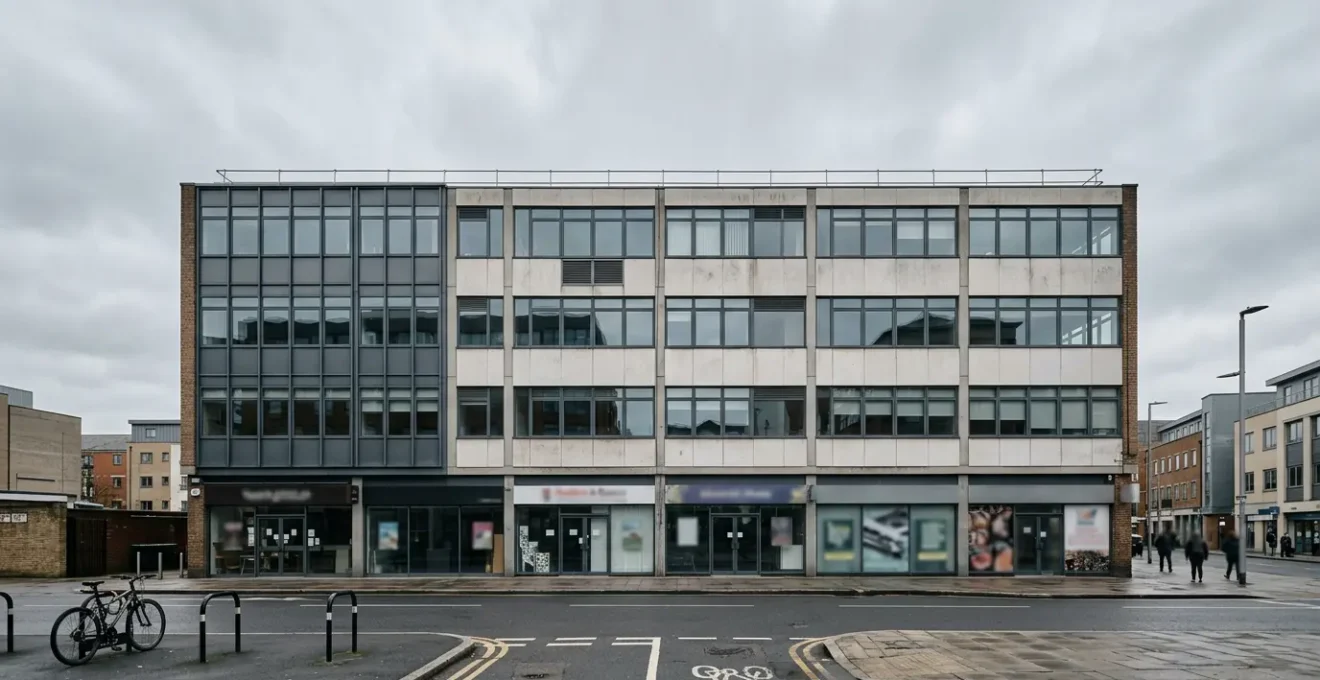
Permitted Development for office-to-residential conversion is no longer a simple shortcut, but a complex viability stress-test where success is far from guaranteed.
- Success now hinges on proving legal commercial use beyond any doubt, not just possessing the asset.
- Local councils are aggressively using tools like Article 4 Directions to halt conversions in commercially valuable areas.
Recommendation: Systematically audit every asset for regulatory, structural, and financial traps before committing capital to a conversion project.
For UK developers holding obsolete office stock, the promise of Permitted Development Rights (PDR) has long felt like a strategic masterstroke. The ability to convert underused commercial buildings into valuable residential units—bypassing the lengthy and uncertain full planning permission process—has reshaped urban landscapes and balance sheets. The conventional wisdom was simple: buy a vacant office, file for prior approval, and unlock significant asset value. This was the golden ticket.
However, the game has fundamentally changed. The landscape in 2025 is not the open field it once was; it’s a regulatory minefield, booby-trapped with new rules, aggressive council pushback, and hidden financial pitfalls. The conversation is no longer just about the opportunity but about the mounting barriers. Developers who continue to view PDR as a simple administrative step are positioned for costly failures. The key to viability now lies not in the right itself, but in a forensic understanding of its limitations.
This guide moves beyond the platitudes. It is a strategic briefing for developers navigating the new reality of office-to-resi conversions. We will dissect the primary hurdles that now define the process, from council-led roadblocks like Article 4 Directions and stringent space standards to the often-underestimated challenges of acoustic insulation and VAT recovery. By understanding these pressure points, you can transform your approach from hopeful opportunism to calculated strategy, determining if PDR is still the right move for your portfolio.
This article provides a detailed breakdown of the critical checkpoints you must navigate for a successful office-to-residential conversion. The following sections explore the key regulatory, technical, and financial hurdles that will determine your project’s viability.
Summary: Office-to-Residential Conversion: A Developer’s 2025 Survival Guide
- Article 4 Directions: How to Check if Your Permitted Development Rights Are Removed?
- Space Standards: Why Your Conversion Plan Might Fail the Natural Light Test?
- Conversion Feasibility: Is It Cheaper to Refurbish as Offices or Convert to Flats?
- Sound Insulation: How to Meet Residential Noise Standards in a Commercial Frame?
- VAT on Conversions: Can You Claim the Reduced 5% Rate on Construction Costs?
- Planning Breaches: Is the Current Use Actually Legal?
- Class E Explained: What Activities Can You Swap Between Legally?
- Use Class E Flexibility: How to Change From Shop to Restaurant Without Planning?
Article 4 Directions: How to Check if Your Permitted Development Rights Are Removed?
The single greatest threat to an office-to-residential conversion strategy is the Article 4 Direction. This is the primary weapon a Local Planning Authority (LPA) can use to withdraw specific PDRs in a defined area, forcing you back into the full planning application process. Once seen as a tool for protecting exceptional heritage sites, councils are now using Article 4s proactively to protect employment zones, high streets, and office stock. This is not a distant threat; it’s a strategic retreat by LPAs to reclaim control over development.
For example, some London boroughs are leading this charge. An analysis of planning policy shows that Islington Council has confirmed multiple Article 4 directions that specifically withdraw Class E to C3 (dwellinghouses) permitted development rights. This action effectively sterilises large swathes of commercial property from easy conversion. Assuming your PDRs exist is a catastrophic mistake; you must actively verify they haven’t been removed. Failure to do so can render your entire acquisition and development model obsolete overnight.
Verifying the status of Article 4 is non-negotiable due diligence. It’s the first gate in your viability assessment. A property’s location within a designated employment zone, conservation area, or even a seemingly standard commercial district could now mean your rights have been stripped away. This check must be performed with forensic precision before any capital is committed.
Your Action Plan: Verifying Article 4 Status
- Contact your local planning authority directly to check current Article 4 Directions affecting your property.
- Use the local authority’s online planning map portal to view designated areas; many councils provide interactive maps.
- Request confirmation in writing of whether Article 4 applies to your specific property address.
- Review council meeting minutes and policy drafts to anticipate future Article 4 designations in your area.
- Check if your property falls within conservation areas, CAZ, or designated employment zones where Article 4s are most common.
Space Standards: Why Your Conversion Plan Might Fail the Natural Light Test?
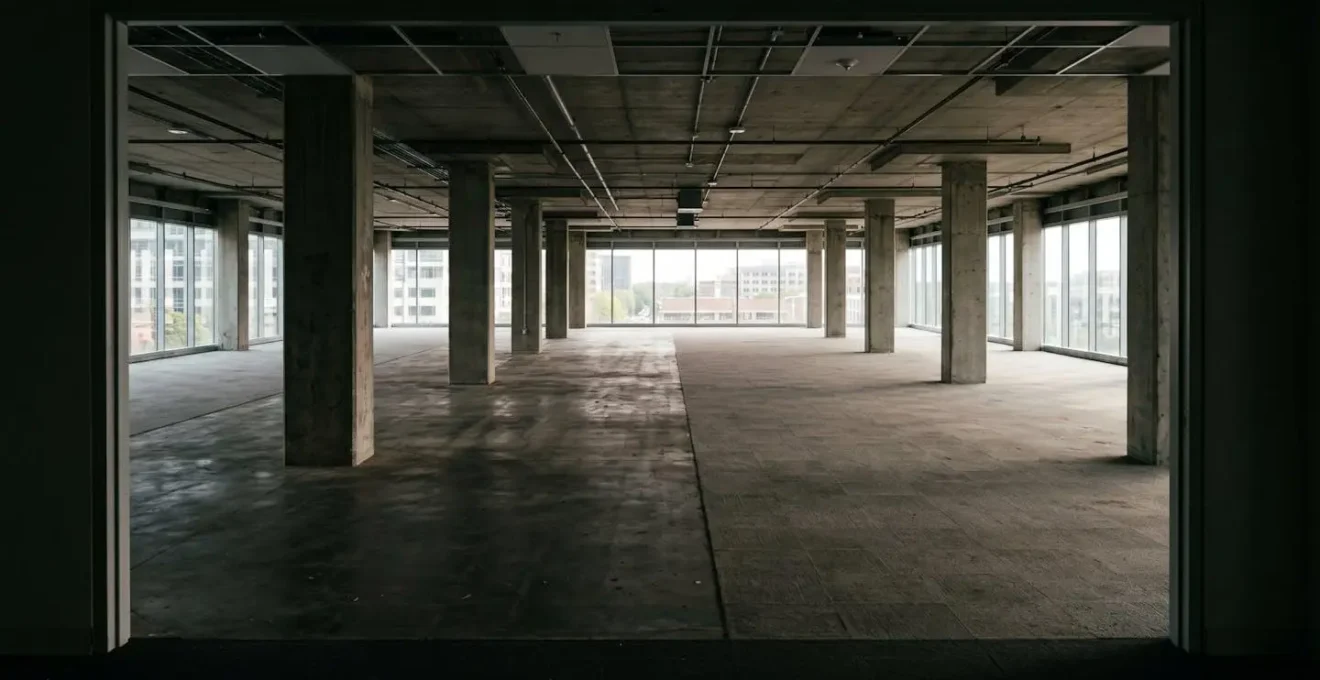
Assuming you clear the Article 4 hurdle, the next major challenge is the physical suitability of the building itself. Since 2021, all new homes created via PDR must meet National Described Space Standards and, crucially, provide adequate natural light in all habitable rooms. This seemingly simple requirement is the Achilles’ heel of many modern office buildings, which were designed with deep floor plates to maximise desk space, not residential comfort.
A typical 1980s or 90s office building may have a core-to-window depth of over 15-20 metres. While the perimeter offices are flooded with light, the vast internal space is a dark zone, wholly unsuitable for creating habitable rooms like bedrooms or living areas. Carving this deep space into compliant flats often results in awkward, inefficient layouts with long, dark corridors or internal rooms that fail the natural light test. This is a problem of geometry and physics, not just interior design.
The assessment is becoming more stringent. As noted by industry experts, the focus is shifting towards measurable performance. In their analysis of office-to-residential conversions, TFT Consultants highlight the evolving standards:
These guidelines now require minimum Lux levels be achieved to 50% of the room area, meaning a more uniform light level.
– TFT Consultants, Office-to-Residential Conversions Analysis
This technical requirement means a developer can no longer rely on a single window at one end of a long room. The challenge is to demonstrate sufficient light distribution throughout the space, a test many deep-plan commercial buildings are structurally incapable of passing without prohibitively expensive interventions like creating new light wells or atriums.
Conversion Feasibility: Is It Cheaper to Refurbish as Offices or Convert to Flats?
The fundamental question for any asset owner is one of financial viability. With the office market facing structural challenges and residential demand remaining high, conversion seems like the obvious answer. While government statistics show PDR delivered thousands of homes, the decision is not as clear-cut as it once was. The rising costs and complexity of conversion mean that, for some buildings, a high-quality office refurbishment might yield a better, faster return.
A detailed viability assessment must compare two distinct scenarios: a “strip-out and refurb” for continued office use versus a “full conversion” to residential. The conversion route involves significantly more invasive—and expensive—work. This includes creating individual utility connections for each flat, extensive acoustic separation, new plumbing stacks, and potentially significant structural alterations to accommodate light wells or balconies. These costs can quickly erode the perceived value uplift.
Case Study: LSH South East Office Audit
Lambert Smith Hampton (LSH) conducted a comprehensive audit of office buildings across the South East, identifying a staggering 12.9 million sq ft of space they considered prime for permitted development conversion. The audit targeted buildings with high vacancy or upcoming lease breaks, with Reading showing the largest single opportunity at 2.0 million sq ft. However, their research came with a critical warning: build costs can be higher for PD projects depending on conversion complexity. Furthermore, they highlighted that the mortgageability of converted flats can be a serious issue on business parks where the primary surrounding use remains commercial, potentially limiting the exit strategy.
This case study perfectly illustrates the dichotomy: the opportunity is vast, but the execution is fraught with financial risk. Your feasibility study must therefore model not just construction costs, but also the timeline, financing challenges, and ultimate saleability of the end product. In some cases, a modern, well-specified office refurbishment targeting a new breed of tenant may be the more prudent commercial decision.
Sound Insulation: How to Meet Residential Noise Standards in a Commercial Frame?
A building designed for the daytime hum of an office is fundamentally different from one designed for 24/7 residential living. One of the most significant, and often underestimated, technical challenges in an office-to-resi conversion is acoustics. Commercial buildings are typically constructed with open-plan layouts, lightweight partitions, and extensive service voids in suspended ceilings and raised floors—all of which are pathways for sound.
Residential conversions, however, must comply with the stringent requirements of Approved Document E (Resistance to the passage of sound). This regulation sets minimum standards for airborne and impact sound insulation between dwellings. For conversion projects, building regulations require a minimum airborne sound resistance of 43 dB for walls and floors between flats. Achieving this in a steel or concrete frame originally designed for commercial loads is a significant undertaking.
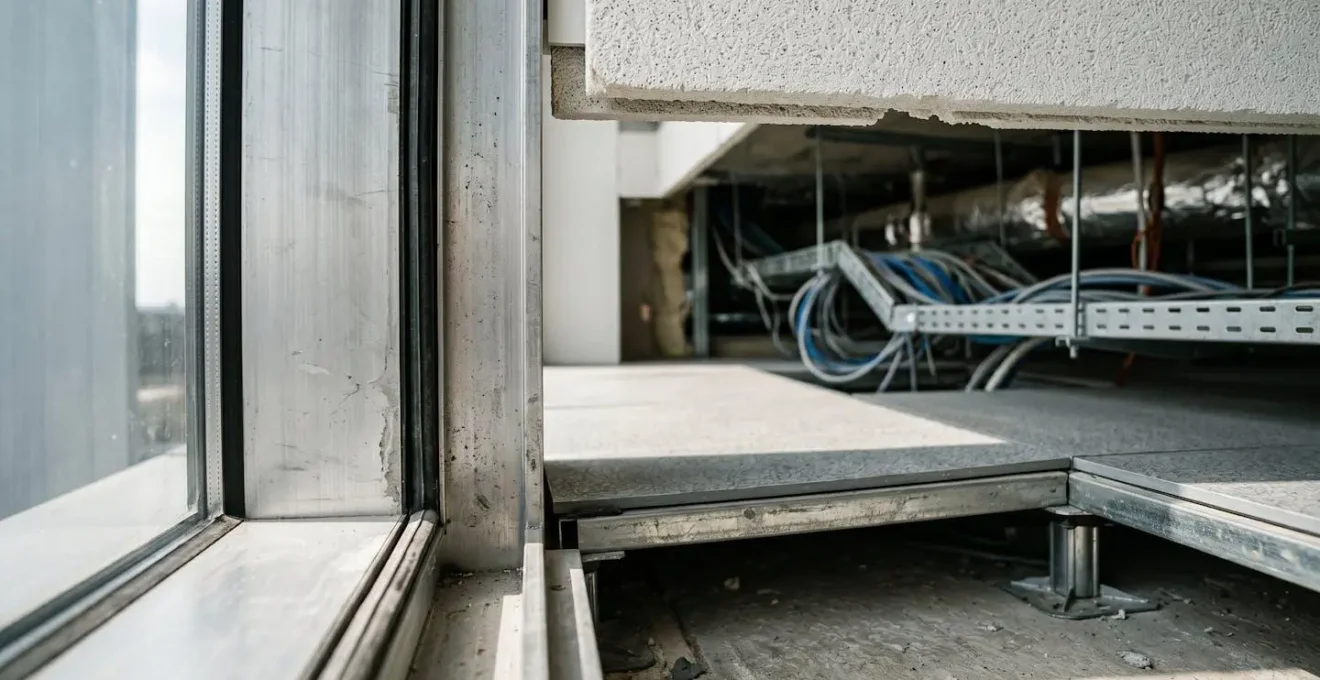
The common acoustic weak points, or “flanking paths,” in office buildings are numerous. Sound can travel easily through curtain walling systems, around structural columns that pass between units, through shared floor and ceiling voids, and via service penetrations. Addressing these requires a robust acoustic strategy from the outset. This often involves building independent wall linings, installing high-performance acoustic floors, and meticulously sealing every potential gap and void. These measures are not cosmetic; they are a legal requirement for the building to be signed off and for the units to be habitable and mortgageable.
Ignoring acoustics until the later stages of a project is a recipe for disaster, leading to failed pre-completion sound tests, costly remedial work, and significant project delays. The acoustic performance must be designed-in, not patched-on, treating the existing commercial frame as a starting point that requires substantial enhancement to meet residential standards.
VAT on Conversions: Can You Claim the Reduced 5% Rate on Construction Costs?
The tax implications of a conversion project are a critical component of its financial viability, and the VAT treatment is a prime example of a potential pitfall disguised as an opportunity. On the surface, the rules seem highly favourable: the conversion of a non-residential building into dwellings can qualify for a reduced VAT rate of 5% on construction services, a significant saving compared to the standard 20% rate. However, accessing this benefit is complex and poses a major cash flow challenge.
The core issue is a mismatch between what you pay and what you can ultimately claim. As highlighted in a guide by PropertyData, the operational reality is far from straightforward.
While a 5% rate is achievable, you often pay suppliers 20% VAT upfront. This creates a significant cash flow deficit that needs to be financed.
– PropertyData, Office to Residential Conversion Guide
This means your project budget must be robust enough to fund the full 20% VAT on invoices from contractors and suppliers. The process of reclaiming this overpaid VAT from HMRC is separate and can be slow, putting significant strain on your working capital. This “VAT float” must be factored into your funding model from the very beginning. Furthermore, the 5% rate does not apply to everything. Professional fees (architects, surveyors) remain at 20%, as do the costs of certain goods like white appliances if supplied separately.
To successfully navigate this, you must maintain meticulous records and understand the eligibility criteria. The building must not have been used as a dwelling in the 2 years prior to the work, and you need robust evidence of its previous commercial use. Failure to comply can lead to the full 20% rate being applied retrospectively, a potentially catastrophic blow to your project’s profitability.
Planning Breaches: Is the Current Use Actually Legal?
Before you can convert a property from Class E (Commercial, Business and Service) to Class C3 (Dwellinghouse), you must be certain that the existing use is lawful. This seems obvious, but it’s a common and costly oversight. You cannot convert from a use that was never legally established in the first place. An office that has been operating without the correct planning permission, or in breach of a condition, does not have a lawful Class E use to convert from.
This requires a forensic check of the property’s planning history. Was the office use granted by a planning permission? Are there any conditions attached to that permission that restrict changes of use? Has the property been used for something else in the interim, potentially breaking the “continuous use” period required for PDR? If there is any ambiguity, the safest route is to apply for a Certificate of Lawfulness for an Existing Use or Development (CLEUD). This provides a legally binding confirmation from the LPA that the building’s current use is lawful, giving you a solid foundation for your prior approval application.
The consequences of getting this wrong are severe. If the LPA determines the existing use is not lawful, your prior approval application will be invalid. You could be left with an asset that you can neither convert nor legally let for its previous purpose without first rectifying the planning breach. This risk is amplified in certain locations, as highlighted by LSH Property Consultants, who warn that even a successful conversion might not be a secure exit:
Converted residential units on business parks may not be mortgageable where offices are still the location’s main use.
– LSH Property Consultants, Office to Residential Permitted Development Analysis
This demonstrates how legal status and market context are intertwined. Your due diligence must extend beyond the building’s four walls to its planning history and its place within the wider commercial landscape.
Class E Explained: What Activities Can You Swap Between Legally?
The introduction of Use Class E in September 2020 was a landmark deregulatory move, bundling a vast range of commercial activities into a single, flexible class. This includes former Use Classes A1 (Shops), A2 (Financial and Professional Services), A3 (Restaurants and Cafés), B1 (Business), and parts of D1 (Non-residential institutions) and D2 (Assembly and leisure). This flexibility means you can change a building’s use from a shop to a restaurant, or an office to a gym, without needing planning permission—a huge boon for landlords seeking to adapt to changing market demands.
However, when it comes to leveraging Class E for a residential conversion under PDR (specifically Class MA), this flexibility comes with a critical, non-negotiable condition. The property must have been in a qualifying Class E use for a continuous period of at least two years before the date of the prior approval application. Simply owning a vacant building that falls within Class E is not enough. You must be able to prove its active use.
This “paper trail imperative” is where many developers fall short. The burden of proof is on you. You need to assemble a comprehensive evidence pack to submit with your application, demonstrating uninterrupted use. An LPA will scrutinise this evidence, and any gaps in the timeline could be grounds for refusal. Proving continuous use requires more than a lease agreement; it requires a documented history of occupation and operation. The evidence must be robust and cover the full two-year period.
To satisfy the LPA, you should compile a timeline with cross-referenced evidence, including:
- Business rate bills showing a Class E assessment.
- Utility bills demonstrating active commercial occupation.
- Copies of commercial lease agreements or tenancy records.
- Marketing materials or website archives documenting the business activity.
- Witness statements from previous tenants or neighbouring businesses.
Key Takeaways
- PDR is a Filter, Not a Shortcut: The modern Permitted Development landscape is designed to weed out unsuitable buildings and unprepared developers. Success requires navigating a complex series of regulatory, technical, and financial tests.
- Proof of Use is Paramount: You cannot convert a building from a use that was not legally and continuously established. The burden of proof for the two-year Class E rule rests entirely on the developer and requires a meticulous paper trail.
- Local Council Pushback is the New Norm: Assume that if a Local Planning Authority has a tool to block or control development (like Article 4 Directions), they will use it to protect their local plan. Active verification is mandatory.
Use Class E Flexibility: How to Change From Shop to Restaurant Without Planning?
The true power of Use Class E lies in its internal flexibility, a concept that underpins the entire office-to-resi strategy. Before you can even consider converting *out* of Class E to residential, you must first have a solid, legally established Class E use. The class itself is a broad church, designed to give high streets and commercial centres the agility to adapt. As Islington Council’s guidance clarifies, Class E includes shops, restaurants, estate agents, offices, museums and indoor sports facilities. A landlord can switch between these uses without planning permission, allowing them to respond quickly to market vacancies.
For a developer, this has two implications. Firstly, if you acquire a vacant shop (formerly A1), you have the right to let it as an office (formerly B1) to establish the commercial use required for a future residential conversion. This flexibility is a strategic tool. Secondly, and most importantly, this wide definition means your due diligence must be equally wide. You must confirm that the specific activity carried out in the building over the past two years falls squarely within the definition of Class E and has been continuous.
This is the bedrock of your entire project. Every subsequent step—the prior approval application, the design, the financing—is built upon the assumption that the property has a lawful and provable Class E use. If this foundation is weak, the entire structure is at risk of collapse. Therefore, mastering the nuances of Class E isn’t just about understanding what’s possible; it’s about being able to prove, without a shadow of a doubt, what has already happened within the building’s walls.
Ultimately, a successful conversion in 2025 requires a paradigm shift. You are not simply filing paperwork; you are building a legal, technical, and financial case for your project. Begin today by auditing your existing or target assets against these critical checkpoints to determine if they represent a genuine opportunity or a costly trap.