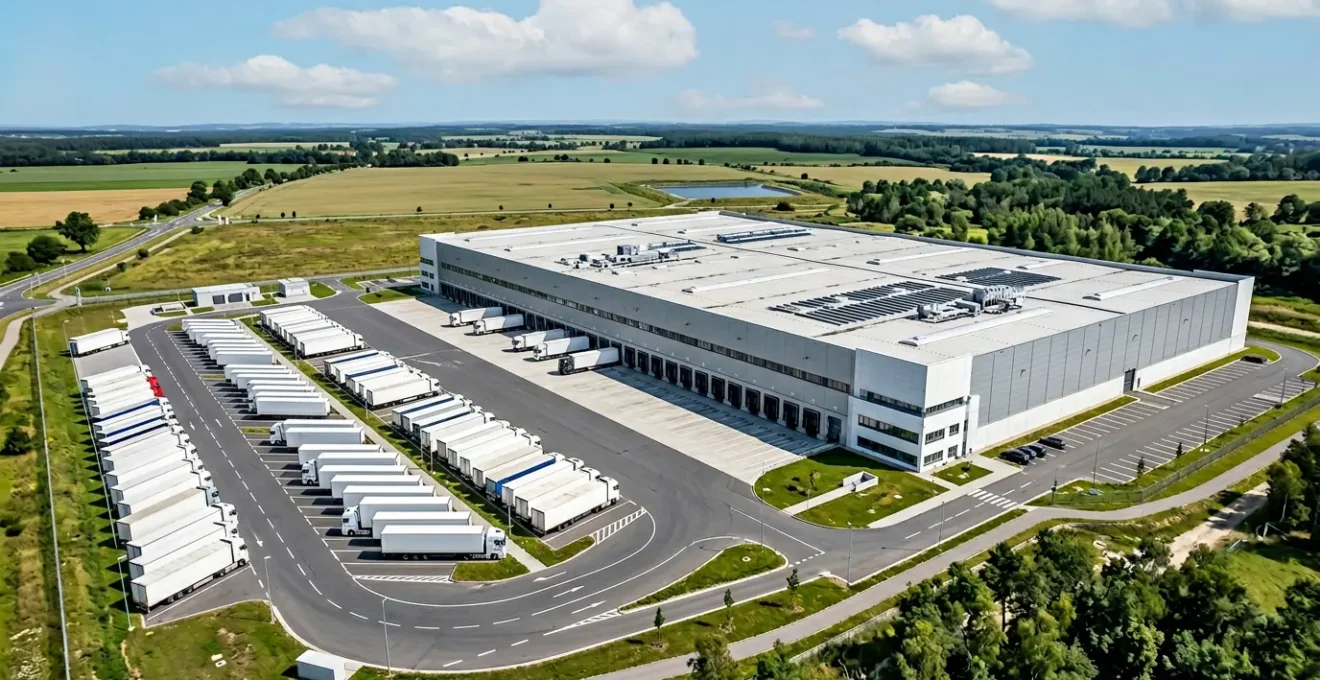
An outdated warehouse isn’t a value asset; it’s a financial liability waiting to happen, where specification obsolescence directly erodes your potential yield.
- Tenant demand is now dictated by automation-ready specifications, making 12m+ eaves heights and super-flat FM2 floors non-negotiable for achieving premium rents.
- The massive power requirements for EV fleets and robotics are making grid capacity a critical deal-breaker, turning under-powered sites into unlettable assets.
Recommendation: Your primary action before any acquisition is to commission a full technical and environmental due diligence report to precisely quantify the risk of specification obsolescence.
In today’s fiercely competitive logistics market, investors are paying premium prices for warehouse assets. The common wisdom focuses on location and square footage, but this view is dangerously incomplete. As the logistics sector hurtles towards 2025, driven by the relentless demands of e-commerce, automation, and ESG mandates, a new and more critical factor has emerged: technical specification. An asset that looks good on paper can quickly become a financial black hole if its core infrastructure cannot support the operational needs of a modern tenant.
The real risk for an investor is no longer just a vacant building, but a building that is functionally obsolete. This is the danger of specification obsolescence—a state where the eaves height, power supply, or yard layout makes a warehouse incompatible with modern logistics technology, rendering it unlettable to the most desirable tenants. Forgetting to verify these technical details is akin to buying a smartphone that can’t connect to 5G; it may work, but it’s already behind the curve and losing value fast.
But if the key to a successful investment is no longer just about ‘location, location, location’, what are the critical technical metrics that truly matter? This guide moves beyond the brochure to provide a technical due diligence checklist for investors. We will dissect the non-negotiable specifications—from the verticality of automation to the hidden liabilities in the ground—that define a future-proof logistics asset. This is about transforming technical jargon into a clear roadmap for de-risking your investment and securing long-term, profitable lease agreements.
This article provides a detailed breakdown of the critical technical specifications that investors must scrutinize. Explore the full structure to understand how each element impacts asset value and tenant appeal.
Summary: Logistics Warehousing: The Technical Specs UK Investors Must Verify in 2025
- Eaves Height: Why 12 Metres Is the New Standard for Logistics Tenants?
- Power Capacity: Is Your Warehouse Grid-Ready for EV Fleets and Automation?
- Yard Depths: Why HGV Turning Circles Can Make or Break a Lease Deal?
- Last Mile vs Big Box: Which Location Strategy Offers Better Yield Compression?
- Industrial Dilapidations: Who Pays for Floor Repairs After Forklift Damage?
- Remediation Costs: How Much to Clean Up a Leaking Oil Tank Site?
- Tenant Profiling: How to Tailor Your Marketing to Logistics Companies?
- Phase 1 Desk Study: Why Is It Essential for Every Commercial Purchase?
Eaves Height: Why 12 Metres Is the New Standard for Logistics Tenants?
The internal clear height of a warehouse, or eaves height, has become the single most important metric for determining a building’s operational capacity. While older stock may offer 8 or 10 metres, the market has decisively shifted. For modern logistics tenants, especially those in e-commerce and 3PL, anything less than 12 metres is increasingly seen as restrictive. This isn’t about simply stacking more pallets; it’s about enabling a new dimension of automation that drives operational density—the ability to process more goods within the same footprint.
The primary driver for this vertical race is the adoption of Automated Storage and Retrieval Systems (ASRS). These robotic systems can operate at heights far beyond the safe limits of a traditional forklift. As one industry analysis on automation highlights, “ASRS can efficiently use vertical space that would be impractical or unsafe for traditional forklift operations.” This technology is fundamental to high-throughput operations. An investor providing a building with a 12m, 15m, or even 18m clear height is not just offering more space; they are offering the potential for a tenant to radically increase their efficiency, a benefit for which they will pay a premium.
For an investor, this means a building with a lower eaves height carries a significant obsolescence risk. It may be unable to attract A-grade tenants who rely on high-level automation. The market now understands that clear heights of 32 to 36 feet (approximately 10 to 11 meters) are the minimum for accommodating modern racking and automation. Therefore, a 12-metre-plus asset is not just a ‘nice to have’; it’s a strategic investment in future-proofing the building’s value and securing its place at the top of the rental market.
Power Capacity: Is Your Warehouse Grid-Ready for EV Fleets and Automation?
For decades, warehouse power requirements were modest. Today, power capacity is a critical bottleneck and a major point of due diligence for investors. The dual trends of warehouse automation and the electrification of commercial vehicle fleets have created an unprecedented demand for electricity. A warehouse without a robust power supply is effectively unusable for a top-tier logistics operator, creating a significant point of grid friction between the asset’s capability and the tenant’s needs.
The power draw of a fully automated sorting system, combined with robotic picking arms and conveyor belts, is substantial. But the game-changer is the electrification of delivery vans and HGVs. Charging a fleet of electric vehicles overnight requires a massive, sustained power supply that most older industrial buildings simply do not have. Leading developers are already responding to this demand; for instance, Prologis has installed over 34 megawatts of EV charging capacity across its portfolio, a clear signal of where the market is headed. An investor looking at an asset must ask: does this building have the existing kVA capacity, or at least the potential for a grid upgrade, to support this future?
This technical detail of the electrical infrastructure directly impacts the building’s lettability and value.

As seen in the intricate systems required, securing a sufficient grid connection can be a time-consuming and expensive process, often taking years and costing millions. A building with a pre-existing high-capacity connection is therefore at a significant competitive advantage. For an investor, verifying the available power and the potential for upgrades is no longer an afterthought; it is a fundamental aspect of assessing the asset’s long-term viability and its ability to attract and retain tenants at the forefront of the logistics revolution.
Yard Depths: Why HGV Turning Circles Can Make or Break a Lease Deal?
While investors focus on the building’s interior, savvy tenants are equally concerned with what happens outside. The service yard is the operational heart of any distribution centre, and its design can dramatically impact efficiency. An inadequate yard depth, tight turning circles, or insufficient parking for HGVs can create bottlenecks that cripple a tenant’s operation. This is no longer just about allowing a 44-tonne articulated lorry to turn around; it’s about accommodating the high volume of vehicle movements that modern e-commerce fulfilment demands.
Case Study: The Future-Proof Yard
A prime example of forward-thinking yard design is the development of North America’s largest heavy-duty truck charging hub. Completed in just five months, the facility has the capacity to charge over 300 electric trucks daily. This project demonstrates the critical importance of yard space planning not just for current maneuverability, but for future-proof logistics operations. The design explicitly includes zones for autonomous truck maneuvering and the extensive infrastructure needed for large-scale EV charging, turning the yard into a strategic asset rather than a simple parking area.
A minimum yard depth of 50 metres is now considered standard for a modern, cross-docked logistics facility, allowing for efficient HGV manoeuvring and trailer parking without obstructing circulation routes. Furthermore, the layout must account for separate access and circulation for staff cars and commercial vehicles to ensure safety and operational flow. A poorly designed yard can lead to increased vehicle damage, slower turnaround times, and ultimately, a lower throughput for the entire facility.
For an investor, the yard is a critical component of the asset’s overall value proposition. During due diligence, it is essential to review site plans, track HGV turning paths, and assess the provision for both operational and staff parking. A generous, well-designed yard is a powerful leasing tool and a clear indicator of a building’s ability to handle the intensity of modern logistics, making it a key factor that can make or break a high-value lease deal.
Last Mile vs Big Box: Which Location Strategy Offers Better Yield Compression?
The strategic debate between investing in large, out-of-town ‘big box’ distribution centres versus smaller, urban ‘last mile’ hubs is central to modern logistics real estate. Big box warehouses, often exceeding 500,000 sq ft, benefit from economies of scale and excellent motorway access, serving as national or regional hubs. Last mile facilities, typically under 100,000 sq ft, are located deep within urban areas to facilitate rapid delivery to consumers. Both strategies offer distinct risk and reward profiles for investors, with the key difference often boiling down to the yield compression delta.
The last mile sector is experiencing explosive growth, with recent market research indicating a 7.2% CAGR from 2024 through 2026 in the U.S. 3PL market alone. This demand is driven by consumer expectations for same-day or next-day delivery. However, these assets come with challenges: they are expensive to acquire, often require significant refurbishment, and face operational constraints in congested urban environments. As Tony Jasinski, a partner at Last Mile Experts, notes, “The last mile is the most expensive leg of the delivery journey because you’re moving a small number of packages to individual addresses.” Tenants are willing to pay high rents for these locations, leading to sharp yield compression for investors, but the operational costs are equally high.
In contrast, big box warehouses offer stability and long-term leases with blue-chip tenants. While the yields may not compress as aggressively as in the hyper-competitive last mile market, the risk is often lower. The ideal strategy for a diversified portfolio may involve a blend of both. An investor must weigh the potential for rapid capital growth in the last mile sector against the stable, long-term income of a big box asset. The choice depends on investment horizon, risk appetite, and an understanding of the complex operational economics that drive tenant decisions in each sub-market.
Industrial Dilapidations: Who Pays for Floor Repairs After Forklift Damage?
The warehouse floor is the most abused and critical surface in any logistics building. It must withstand the constant traffic of heavy forklifts, the impact of dropped pallets, and the precise demands of automated systems. When a lease ends, the condition of the floor is often a major point of contention in dilapidations claims. The central question—who pays for repairs—hinges on the original specification of the floor and the terms negotiated in the lease.
Modern logistics operations, especially those using Very Narrow Aisle (VNA) racking and automated guided vehicles (AGVs), require exceptionally flat and durable floors. The industry standard is often a floor built to FM2 specifications, a classification that guarantees a high degree of surface regularity. A building with an FM2-grade floor is significantly more attractive to high-tech tenants and can command a premium. According to construction specialists, Grade-A warehouses with this feature can achieve 10-15% higher lease rates. This specification is not just a feature; it’s an income-generating asset.
The high-quality finish of such a floor is a key investment characteristic.

From an investor’s perspective, installing a high-specification floor from the outset is a smart defensive move. It reduces the likelihood of damage and simplifies dilapidations negotiations. Leases should contain clear clauses that define the required condition of the floor upon exit, referencing specific flatness standards. While the tenant is generally responsible for repairing damage caused by their operations, proving whether a crack or spall is ‘fair wear and tear’ versus negligence can be difficult. A superior initial specification provides a stronger baseline, protecting the landlord’s asset and ensuring the building remains lettable to the next A-grade tenant without requiring costly interim repairs.
Remediation Costs: How Much to Clean Up a Leaking Oil Tank Site?
While investors are focused on the future potential of automation and EV fleets, they cannot ignore the legacy risks buried in the ground. Historic land contamination, such as a leaking diesel tank from a previous occupier, can be a catastrophic latent liability. The cost to investigate, remediate, and obtain regulatory sign-off for a contaminated site can run into hundreds of thousands, or even millions, of pounds. This unforeseen expense can wipe out the entire projected profit from a deal and halt any development or leasing activity for years.
The presence of contamination is not just a financial risk; it’s a direct threat to a modern tenant’s operational and ESG (Environmental, Social, and Governance) goals. Tenants are increasingly sophisticated, demanding assets that align with their corporate sustainability targets. A site with a history of contamination is a red flag, but a site that actively supports ESG initiatives is a major draw. Proactive landlords are now integrating sustainability features not as a bonus, but as a core part of the asset’s offering. This includes everything from rooftop solar arrays to energy-efficient lighting and facilities for waste recycling.
For an investor, the ESG performance of a warehouse is now a critical component of its value. Failing to meet these standards can be as damaging as discovering a leaking oil tank. The following checklist outlines key initiatives that are becoming standard requirements for A-grade tenants, transforming potential liabilities into value-adding opportunities.
Your Action Plan: ESG Compliance Checklist for Warehouse Acquisitions
- Assess rooftop suitability and structural capacity for the installation of solar panel systems aimed at achieving net-zero energy consumption targets.
- Verify the power infrastructure’s ability to support a shift to lithium-ion batteries and hydrogen fuel cells for all material handling equipment.
- Evaluate the building’s insulation and systems, especially in cold storage areas, for compatibility with robotic systems that minimize energy-intensive temperature fluctuations.
- Confirm the asset’s ability to meet evolving regulations, such as the EU Green Deal, to ensure it remains attractive to the 60% of logistics companies integrating green practices by 2025.
- Conduct a thorough Phase 1 Environmental Site Assessment to identify and quantify any potential pre-existing contamination liabilities.
Tenant Profiling: How to Tailor Your Marketing to Logistics Companies?
Marketing a logistics warehouse effectively requires a deep understanding of the target audience. The generic “For Lease” sign is no longer sufficient. Today’s tenants are not a monolithic group; they are diverse operators with highly specific needs. A 3PL specializing in fast-fashion e-commerce has vastly different requirements from a pharmaceutical distributor or a bulk grocery retailer. Effective tenant profiling means moving beyond basic metrics like size and location to understand the operational archetypes that define the modern logistics landscape.
The most significant shift in tenant profiles is the rise of the “tech-led operator.” These are companies whose logistics operations are fundamentally driven by data analytics, automation, and robotics. They view the warehouse not as a passive storage space but as an active, high-throughput fulfillment machine. For these tenants, specifications like floor flatness (for robotics), power capacity (for automation), and data connectivity are not negotiable. The scale of this shift is immense, with the warehouse robotics market projected to reach $21.08 billion by 2030, growing at a 17.7% CAGR. Marketing to this group requires a language that speaks to ROI, operational uptime, and technological compatibility.
Therefore, an investor or agent must tailor their marketing materials to address these specific operational profiles. A marketing brochure should lead with the kVA power capacity, the FM2 floor certification, and the number of EV charging stations, not just the square footage. It involves highlighting how the building’s technical specifications directly enable a tenant’s business model. This targeted approach demonstrates a sophisticated understanding of the market, builds credibility, and ensures that the asset is presented to the tenants who will value it most and, consequently, be willing to pay the highest rent.
Key Takeaways
- Automation-Ready Specs Are Non-Negotiable: Eaves height (12m+) and floor flatness (FM2) are no longer premium features but baseline requirements that directly drive a tenant’s operational density and their willingness to pay higher rents.
- Power Capacity is the New Bottleneck: The massive energy demands of EV fleets and robotics mean that a warehouse’s kVA capacity and potential for grid upgrades are now critical factors determining its viability and lettability.
- Due Diligence Mitigates Latent Liabilities: A thorough Phase 1 environmental study and a detailed analysis of yard/floor specs are essential to uncover hidden costs and risks related to contamination or operational inefficiency before they can erode your investment returns.
Phase 1 Desk Study: Why Is It Essential for Every Commercial Purchase?
The Phase 1 Environmental Site Assessment, or Desk Study, is the single most important piece of due diligence an investor can commission before acquiring a commercial property. It is a fundamental risk management tool designed to identify potential contamination liabilities from the site’s past and present uses. In the context of a high-stakes logistics warehouse acquisition, skipping this step is an act of financial negligence. The study provides a detailed history of the site, identifying potential red flags—such as previous use as a petrol station, a factory, or a scrapyard—that could signal the presence of a latent liability buried in the ground.
The findings of a Phase 1 study directly impact the financial viability of the entire project. If it reveals a high risk of contamination, a more intrusive Phase 2 investigation will be required, involving soil and water sampling. The costs of remediation can be staggering, but the cost of inaction is even greater. An undiscovered contamination issue can render a site un-developable or, worse, make the owner liable for cleanup costs, even if they did not cause the pollution. This is why a clean Phase 1 report is often a prerequisite for securing bank financing.
This due diligence is not just about avoiding costs; it’s about enabling opportunity. A modern tenant, driven by automation, needs a site that is ready for significant capital investment. As an industry analysis states, “Companies planning to increase automation investment to 25% of capital spending over the next five years signals the urgency of this shift.” These tenants cannot afford to have their multi-million-pound automation rollout delayed by environmental investigations. They need a clean, problem-free site. Indeed, industry data shows a 20% average ROI from such investments. A Phase 1 study provides the certainty they need, making it an essential step in securing both the asset and the high-value tenant who will occupy it.
Ultimately, a successful investment in logistics real estate hinges on a rigorous technical and environmental due diligence process. By scrutinizing these critical specifications, you move from being a passive property owner to a strategic partner in your tenant’s success, securing the long-term value and profitability of your asset.