
Financial due diligence on a multi-let building isn’t about verifying income; it’s about proving the seller’s figures are deliberately hiding future liabilities.
- The declared Net Operating Income (NOI) is often inflated by understating repair costs or concealing tenant instability.
- Vague legal replies like “not to the seller’s knowledge” are tactical evasions designed to conceal problems, not genuine answers.
Recommendation: Treat every claim as suspect. Your job is not to accept documents, but to forensically interrogate them to find the story they’re not telling.
When you’re evaluating a multi-let commercial building, the seller presents you with a neat package of numbers: a healthy rent roll, manageable operating expenses, and an attractive Net Operating Income (NOI). The common approach is to verify these figures, conduct a physical survey, and proceed. This is the fastest path to inheriting a financial disaster. The seller is not your partner; they are a counterparty in a zero-sum transaction. Their goal is to maximize their exit price, often by presenting an “income mirage”—a picture of profitability that cannot and will not last.
Forget the standard box-ticking checklists. True financial due diligence is not an administrative task; it is a forensic investigation. It assumes that the provided information is, at best, an optimistic version of the truth and, at worst, a carefully constructed piece of fiction. Your role as an investor is to transform into a skeptical auditor, one whose primary mission is to uncover the hidden liabilities, the ticking time bombs in the lease agreements, and the paper-thin profits of tenants on the verge of collapse. Every document, from a service charge reconciliation to a CPSE reply, must be interrogated, not merely read.
This guide abandons the polite fiction of a transparent transaction. Instead, it provides a forensic framework for dissecting a multi-let building’s income stream. We will move beyond verifying what is declared and focus on uncovering what is concealed. We will analyze the strategies sellers use to inflate value and provide you with the tools to dismantle their narrative, piece by piece, protecting your capital from assets that look pristine on the surface but are rotten to the core.
This article will provide a systematic, forensic approach to your due diligence process. The following sections break down the critical areas where sellers often hide risk, giving you a clear roadmap for your investigation.
Summary: A Forensic Guide to Multi-Let Due Diligence
- Service Charge Audits: Are You Inheriting a Massive Tenant Debt?
- Tenant Credit Checks: How to Read Beyond the Headline Rent?
- Lease Analysis: Did You Miss the Tenant’s Right to Leave in 6 Months?
- OpEx Verification: Is the Seller Understating Maintenance Costs to Boost Net Income?
- CapEx History: Has the Roof Been Repaired or Just Patched Up?
- Interpreting CPSE Replies: What Does “Not to the Seller’s Knowledge” Really Mean?
- Reading Company Accounts: How to Spot if a Tenant Is Insolvent?
- CPSEs Explained: What Must a Seller Disclose About a Commercial Property?
Service Charge Audits: Are You Inheriting a Massive Tenant Debt?
The service charge is the first place a lazy investor gets burned. It’s often presented as a simple pass-through cost, but it is frequently a dumping ground for mismanaged funds, brewing disputes, and huge future liabilities. A seller may be hiding a significant deficit between what has been spent and what has been collected from tenants. This shortfall becomes your problem the day you take ownership. An underfunded sinking fund or a history of large, contested reconciliation charges are major red flags. Tenant experience data reveals that these can lead to an unexpected annual increase of over $18,000 for a single tenant, poisoning landlord-tenant relationships from day one.
Your forensic interrogation must begin here. You are not just checking the math; you are looking for patterns of poor management and tenant dissatisfaction. Are payments consistently late? Are certain tenants in perpetual dispute over charges? These are not administrative issues; they are indicators of a poorly run asset and a potentially unrecoverable debt that you will inherit. A thorough audit exposes the true cost of running the building and the health of its internal financial ecosystem. It’s the first test of whether the seller’s narrative holds up to scrutiny.
Your Action Plan: Service Charge Historical Analysis
- Request detailed payment history: Get the debtor days report for all tenants over the last 24 months to identify late payment patterns and existing arrears.
- Compare estimates vs. actuals: Demand the last two years of service charge reconciliations and compare estimated CAM payments against actual documented expenses to verify accuracy.
- Review expense categorization: Scrutinize the controllable vs. non-controllable expense breakdown to identify any potential mis-classifications designed to hide overspending.
- Examine the sinking fund: The balance must be checked against a credible 10-year capital expenditure projection based on the building’s age and condition. Its absence is a significant liability.
- Spot-check large invoices: Request copies of the largest invoices from the past year to detect non-recoverable capital improvements that have been disguised as recoverable repairs.
Tenant Credit Checks: How to Read Beyond the Headline Rent?
The rent roll is the heart of a multi-let property’s value, but headline rent figures are meaningless without a deep dive into tenant covenant strength. A seller will showcase a fully-let building with an impressive gross income. Your job is to determine how much of that income is real and how much is a phantom, propped up by tenants on the brink of insolvency. A standard credit report is a starting point, but it’s often a lagging indicator. You need to assess a tenant’s forward-looking viability, not just their payment history.
This requires a multi-layered analysis that goes far beyond a simple credit score. You must investigate the tenant’s industry sector, their position within it, their cash flow (not just their reported profit), and their overall strategic direction. Is their business model resilient or vulnerable to the next economic shift? Are they a market leader or a struggling operator? A high-rent tenant in a dying industry is a greater liability than a lower-rent tenant in a high-growth sector. The seller is selling you a stream of income; your forensic task is to determine the true quality and durability of that stream.

As the visual suggests, evaluating tenant risk is a complex, layered process. Each criterion, from financial health to market position, adds a new dimension to your understanding. It’s about building a complete picture, not just accepting a single data point.
Case Study: The Power of a Viability Assessment
A commercial real estate investor was considering a 450,000-square-foot deal that initially appeared too risky due to perceived tenant weakness. Instead of walking away, they commissioned a comprehensive tenant viability assessment. This report incorporated over 200 risk factors, including deep financial statement analysis, peer benchmarking, industry risk, and lease analysis. The detailed findings uncovered specific mitigating factors and underlying strengths that were not apparent from a surface-level review, allowing the investor to proceed with the deal confidently, armed with a true understanding of the income risk.
Lease Analysis: Did You Miss the Tenant’s Right to Leave in 6 Months?
Leases are not static documents; they are a collection of potential landmines. The most dangerous of these is the break clause. A seller will highlight a long weighted average unexpired lease term (WAULT), but this figure can be a complete fabrication if it ignores tenant-only break options. A 10-year lease with a break clause in year 3 is, for all practical purposes, a 3-year lease. Missing this detail means you are fundamentally miscalculating the building’s value.
Your forensic lease review must hunt for these clauses with suspicion. Break clauses often come with conditions that seem pro-landlord but are easily met by a savvy tenant. You must verify the exact notice periods, which according to commercial lease standards are typically 3 to 6 months, and the precise conditions for exercising the break. Furthermore, look for co-tenancy clauses, which allow smaller tenants to terminate their leases or demand rent reductions if a major anchor tenant leaves. This can trigger a catastrophic domino effect on your income stream. The lease document is where the seller’s income promises can be legally dismantled in an instant.
To effectively uncover these risks, your analysis should include:
- Timeline Mapping: Create a visual timeline of all lease expiry dates and break clause trigger dates to identify “cliff years” where a significant portion of your income is simultaneously at risk.
- Co-Tenancy Clause Search: Specifically search for any clauses that link one tenant’s obligations to the presence of another.
- Alienation Clause Review: Understand the tenant’s rights to assign or sublet the lease, which can change the covenant strength without your approval.
- Break Condition Verification: Scrutinize the exact requirements for a tenant to exercise a break, including payment of all sums due, vacant possession standards, and other compliance obligations.
OpEx Verification: Is the Seller Understating Maintenance Costs to Boost Net Income?
Net Operating Income (NOI) is the holy grail for property valuation, and the easiest way for a seller to inflate it is by artificially suppressing Operating Expenses (OpEx) in the 12-24 months leading up to a sale. This is a classic tactic: defer all non-essential repairs, squeeze vendors for temporary discounts, or even neglect the building entirely. The result is an NOI figure that looks robust but is completely unsustainable. You, the new owner, will be left to pay for the years of deferred maintenance.
Your forensic duty is to “normalize” the seller’s OpEx figures. This means rejecting their recent, conveniently low numbers and establishing a realistic, long-term operating budget. You must compare the property’s expenses against industry benchmarks. For example, benchmarking data shows typical OpEx ratios for office properties are 45-55% of effective gross income, while retail is 30-45%. If the seller’s property is significantly below these benchmarks, it is not because they are a brilliant manager; it is because they are hiding costs from you. Never take the seller’s profit and loss statement at face value; it is a marketing document, not an audit.
The following table provides a clear guide to distinguishing a seller’s manipulated figures from a healthy operating pattern. Your goal is to identify these red flags and adjust your proforma accordingly, pricing in the costs the seller has conveniently forgotten.
| Scenario | Red Flag Pattern | Healthy Pattern | Action Required |
|---|---|---|---|
| Repairs & Maintenance Trend | Significant unexplained dip in 12 months prior to sale | Consistent 3-5 year average with minor fluctuations | Normalize using 3-year average; price in deferred work |
| Expense Ratio vs. Benchmarks | 10+ percentage points below peer group | Within 5 points of BOMA/IREM benchmarks | Commission building survey to identify deferred costs |
| Management Fee Structure | Absent or suspiciously low (under 3% EGI) | 3-8% of effective gross income | Add normalized management cost to proforma |
| Controllable vs. Fixed Expenses | Controllable expenses 20%+ below market | Aligned with competitive vendor pricing | Request vendor contracts and invoice samples |
CapEx History: Has the Roof Been Repaired or Just Patched Up?
While OpEx covers the day-to-day running of the building, Capital Expenditures (CapEx) represent the big-ticket items: the roof, the HVAC systems, the elevators, the structural elements. A seller’s greatest deception is often passing off a temporary patch-up job as a full-scale capital replacement. They might claim the roof was “repaired” last year, but your investigation must determine if it was a genuine, warrantied overhaul or a cheap fix designed to last just long enough to get through the sale process.
A lack of a professional, forward-looking 10-year CapEx schedule from the seller is an enormous red flag. It signals either ignorance or deliberate concealment. It forces you to create one from scratch, commissioning an independent building survey to validate every claim. You must demand to see transferable warranties for all major works. If a warranty is non-transferable or filled with exclusions, it’s worthless. This forensic review of the building’s physical and financial future protects you from the liability time-bomb of a multi-million dollar capital replacement that the seller “forgot” to mention.
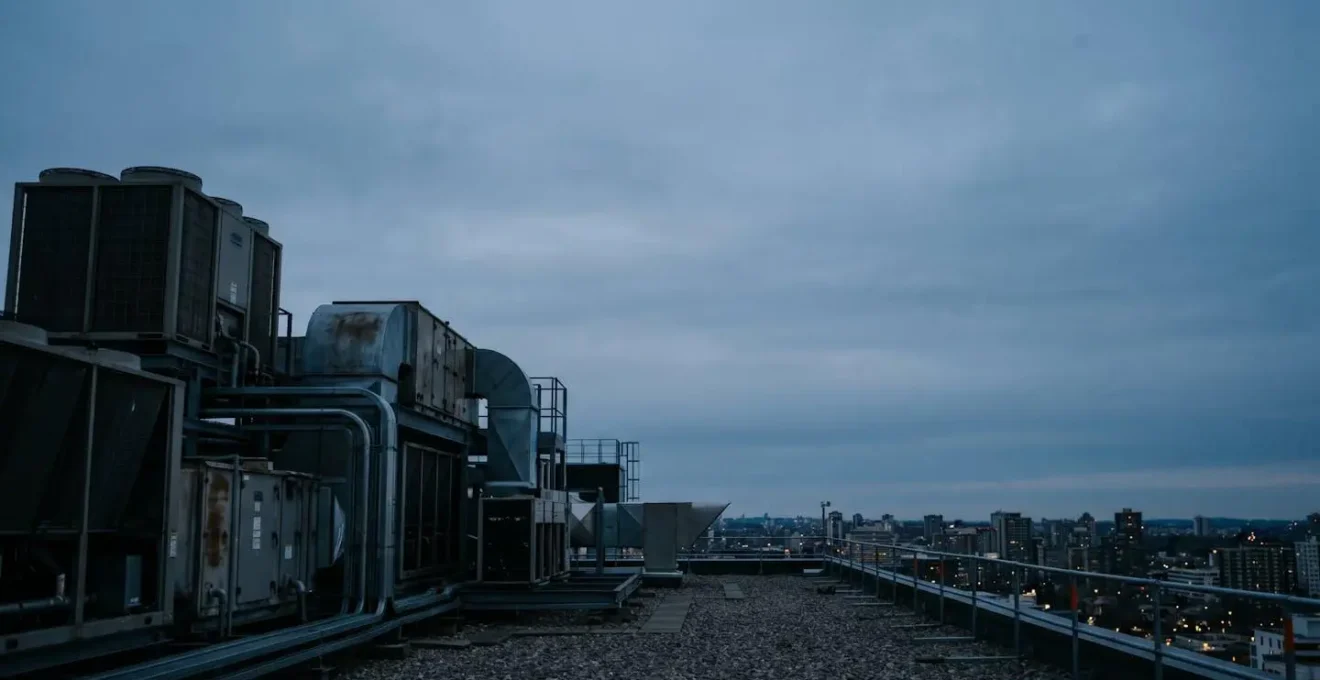
Assessing the building’s infrastructure is not a short-term task. As this image of rooftop systems suggests, you must adopt a long-term perspective, evaluating the lifecycle and future replacement costs of every major component. Your due diligence must account for the next decade, not just the next quarter.
Your protocol should be relentless:
- Demand Warranties: Verify that all warranties for major works (roof, HVAC, lifts) are fully transferable to the new owner and review their exclusions in detail.
- Assess Future Legislation: Identify the building’s current energy performance rating and calculate the mandatory upgrade costs required to comply with future environmental laws.
- Commission Independent Surveys: Never trust the seller’s reports. An independent survey is the only way to validate whether claimed CapEx was a full replacement or a temporary patch.
- Cross-Reference Records: Compare reported CapEx dates and amounts with service charge reconciliation records to detect any instances where capital improvements were improperly disguised as repairs and charged to tenants.
Interpreting CPSE Replies: What Does “Not to the Seller’s Knowledge” Really Mean?
The Commercial Property Standard Enquiries (CPSEs) are a formal part of the legal due diligence process. A naive buyer treats them as a source of truth. A forensic auditor treats them as the beginning of an interrogation. The language used in CPSE replies is a carefully choreographed dance of evasion. Phrases like “Not to the seller’s knowledge” are not a confirmation that no problem exists; they are a legal shield designed to limit the seller’s liability. It often means, “I haven’t actively looked for a problem, so I can claim I don’t know about it.”
Your job is to dismantle this shield. Treat every vague or evasive answer as a bright red flag pointing to a concealed issue. An answer of “The buyer should rely on their own enquiries” is a direct admission that the seller does not want to provide a straight answer. A pattern of such deflections across multiple sections is strong evidence of a deliberate concealment strategy. You must use these evasive replies to generate a second, more pointed wave of forensic questions that leave no room for ambiguity.
Your framework for detecting evasion should be systematic:
- Categorize Answers: Rank evasive replies. “Not to our knowledge” is weak. “Information not available” on a critical point like a tenant dispute is a major alarm.
- Generate Follow-Up Questions: Use a vague answer to demand specific documentation. If the seller has “no knowledge” of disputes, demand to see the last 12 months of management meeting minutes to prove it.
- Identify Contradictions: Cross-reference CPSE replies with financial documents and lease abstracts. Any contradiction points to potential misrepresentation.
- Document the Evasion Pattern: A single vague answer might be an oversight. A dozen of them is a strategy. Document this pattern as leverage in negotiations.
Reading Company Accounts: How to Spot if a Tenant Is Insolvent?
Even with a strong lease, a tenant on the verge of bankruptcy renders your income stream worthless. Assessing tenant solvency goes beyond a simple credit check; it requires a forensic examination of their financial accounts. The profit and loss statement can be misleading, as accounting rules allow companies to report “paper profits” while haemorrhaging cash. The real story is in the Statement of Cash Flows and the Balance Sheet.
The first place to look is the cash flow from operations. A company with negative or consistently declining operating cash flow is a company that cannot pay its bills, including your rent, regardless of what its income statement says. This is the single most important indicator of financial distress. Next, scrutinize the balance sheet for a rising gearing ratio (debt-to-equity), which shows the company is funding itself with more debt. Also, look for declining cash reserves and an increase in “debtor days,” which means its own customers are taking longer to pay them.
Finally, read the notes to the accounts. This is where companies disclose related party transactions. Look for signs that cash is being extracted from the business and funnelled to directors or parent companies, starving the operating entity of the funds it needs to survive. Your analysis should be ruthless, seeking out these warning signs to build a true picture of the tenant’s ability to meet their obligations for the duration of the lease.
- Focus on Cash Flow: Negative operating cash flow is a terminal diagnosis.
- Examine the Balance Sheet: Look for rising debt, falling cash, and increasing debtor days.
- Scrutinize the Notes: Hunt for related party transactions that show cash being extracted from the company.
- Verify Payment History: Demand a 24-month debtor days report from the seller to see if this specific tenant is a chronic late payer.
- Conduct a Digital Footprint Audit: Search for recent news on layoffs, litigation, or negative industry commentary that wouldn’t appear in a formal credit report.
Key Takeaways
- Sellers often inflate Net Operating Income (NOI) by deliberately understating operating and capital expenses.
- Tenant covenant strength is more than a credit score; it’s about the forward-looking viability of their business model and their real cash flow.
- Vague legal replies in CPSEs are not answers; they are tactical evasions designed to hide liabilities and must be challenged with specific, forensic follow-up questions.
CPSEs Explained: What Must a Seller Disclose About a Commercial Property?
In principle, the CPSE process is designed to provide a buyer with comprehensive information about the property. In practice, a seller is only required to answer the questions asked, and their solicitor will advise them to be as brief and non-committal as legally possible. A seller is not obligated to volunteer information that could harm the property’s value. The burden is therefore on you, the buyer, to ask the right questions—specific, targeted, and forensic questions that close off avenues for evasion.
A general question like “Are there any disputes?” will almost always receive a “No” or “Not to the seller’s knowledge.” This is where your forensic approach becomes a powerful tool. As one Commercial Property Due Diligence Expert from the Manning Fulton Commercial Real Estate Transactions Guide notes:
It shifts the burden of truth onto the seller for specific, documented questions.
– Commercial Property Due Diligence Expert, Manning Fulton Commercial Real Estate Transactions Guide
This is the key. By reformulating a general query into a specific, factual one, you force the seller into a corner where a dishonest answer would constitute clear misrepresentation. This strategic questioning is your most effective weapon in due diligence.
Case Study: Uncovering a Dispute with a Targeted Question
A buyer’s solicitor initially received a standard “No disputes” response to a general CPSE question about tenant conflicts. Instead of accepting this, they strategically reformulated the enquiry, asking the seller to confirm that “there have been no written complaints regarding the service charge in the last 24 months.” This forced the seller to disclose a long-running and costly tenant dispute that had been deliberately concealed. The targeted follow-up question closed off the possibility of a vague answer and placed the burden of truth squarely on the seller, under threat of legal action for misrepresentation.
Ultimately, conducting financial due diligence on a multi-let building is an adversarial process. By adopting a suspicious, meticulous, and forensic mindset, you shift the balance of power. You are no longer a passive recipient of information but an active investigator, tasked with uncovering the truth that lies beneath the seller’s polished presentation. This approach is the only way to protect your investment and ensure the income stream you’re buying is real and sustainable.